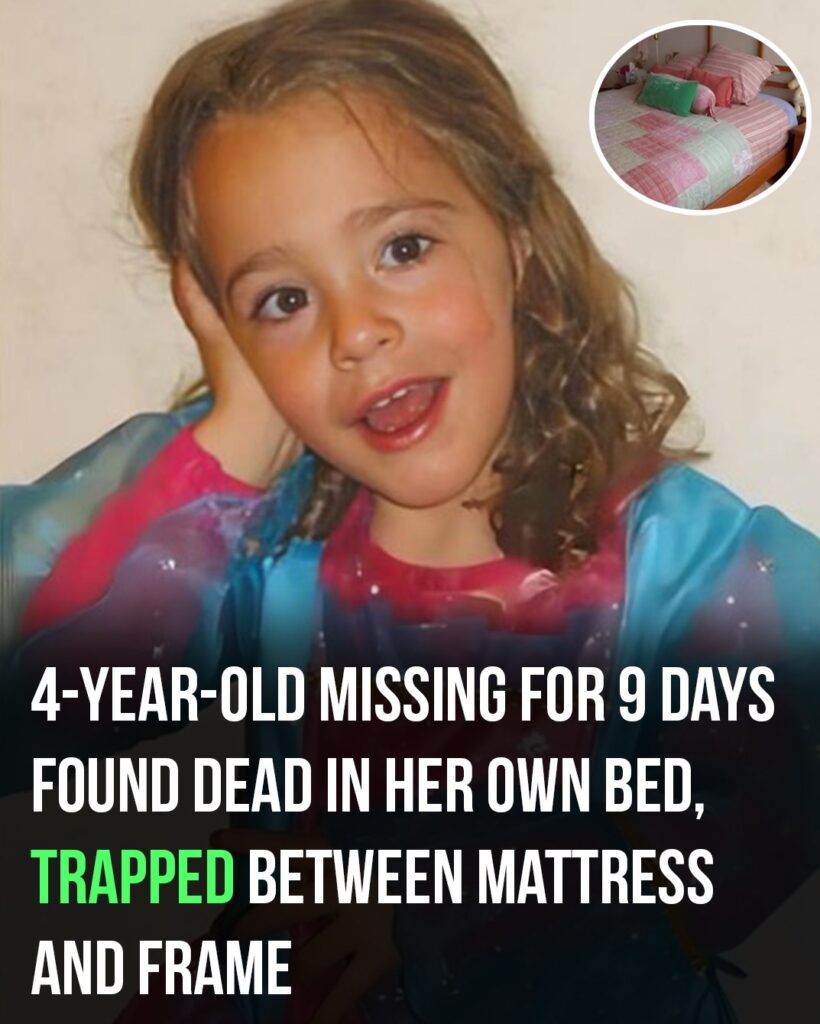
Description: The 2010 disappearance and shocking death of four-year-old Paulette Gebara Farah in Mexico remains one of the country’s most mysterious and controversial cases.
Girl, 4, Missing for Over a Week, Found Dead in Her Bed
The disappearance and death of Paulette Gebara Farah remains one of Mexico’s most disturbing and controversial mysteries. In 2010, the four-year-old vanished from her own bedroom, only to be discovered dead — lodged in her bed — sparking national outrage and endless speculation.
The Disappearance: The Night That Changed Everything
On the night of March 21, 2010, Paulette returned home with her father and older sister from a weekend trip. Her apartment, located in Huixquilucan, State of Mexico, was in a gated complex with security surveillance. Her mother, Lizette Farah, tucked Paulette and her sister into bed. Paulette, who had developmental disabilities affecting her speech and mobility, required constant supervision.
The next morning, when one of the family nannies, Erika, went to wake her, Paulette was gone. Her bed was empty. Panic spread through the household as family and staff searched every room, closet, and corner — but found no trace. Doors and windows were locked, and security cameras showed no suspicious activity. Because of Paulette’s disabilities, it was extremely unlikely she had wandered away alone.
A massive search ensued: police, volunteers, search dogs, social media campaigns, billboards, posters, and TV appeals filled the region. Lizette appeared on live television, pleading for her daughter’s safe return.
Investigation, Suspicion, and Contradictions
Days passed, and suspicion began shifting toward those closest to Paulette. Seven days after her disappearance, authorities placed her parents and two nannies under restriction orders (arraigo) for providing inconsistent statements. Attorney General Alberto Bazbaz stated that accounts had been altered, complicating the investigation.
Police reconstructed the night Paulette went missing within the apartment, using blankets and forensic teams to simulate movements. Media scrutiny intensified, and public skepticism grew over whether those closest to Paulette had told the truth.
The Macabre Discovery
On March 31, 2010 — nine days after her disappearance — investigators made a shocking discovery: Paulette’s body was found in her own bedroom, wedged into the narrow gap between her mattress and the bed frame, wrapped in sheets and blankets.
The discovery stunned the nation. Search teams, media crews, and even family members had thoroughly inspected the room, and yet Paulette’s body went unnoticed for over a week. Search dogs had failed to detect anything, and some people had even used her bed during the search.
Leaked video footage of the investigation shows at least one voice saying, “She was severely beaten,” though Bazbaz quickly denied any homicide.
Autopsy and Official Findings
An official autopsy concluded:
- Paulette had an “orthopedic cloth” across her mouth at night.
- Her body showed no post-death manipulation and reflected her final sleeping position.
- Minor bruising was found on her left elbow and knee; no evidence of assault or sexual violence.
- Toxicology tests were negative.
- Death was ruled as accidental mechanical asphyxia, caused by obstruction of nasal passages and thoraco-abdominal compression — she suffocated after becoming trapped.
- The timing of death was estimated between five and nine days before discovery.
Authorities believed she had turned in bed, slid into the narrow gap, and became trapped. Bazbaz admitted investigators had focused on searches outside the home, overlooking possible hiding places inside her room.
Controversy and Outrage
The official version — that Paulette went missing for nine days only to be found in her bed — sparked widespread skepticism. Many questioned how trained police dogs, forensic teams, and dozens of searchers missed her for so long.
The nannies maintained they had thoroughly searched the room and claimed it was impossible to miss Paulette. Critics, including Jesús Ortega of the PRD, publicly challenged the investigation:
“Who wants to protect whom — how did 100 police searching a 10‑square‑meter room fail to find her body?”
The case led to Attorney General Bazbaz’s resignation, amid public criticism of the investigation. Paulette was buried at Panteón Francés de San Joaquín in Mexico City in April 2010. In May 2017, her remains were exhumed and cremated, as they were no longer needed for evidence.
Legacy of a Tragic Mystery
Netflix dramatized the case in its 2020 series Crime Diaries: The Search (Historia de un crimen: La búsqueda), reigniting public interest and debate. While the official ruling labels her death as tragic and accidental, unanswered questions remain. The body in a “searched” room, contradictory caretaker statements, and media activity in the bedroom all contribute to ongoing speculation that the full truth behind Paulette’s death may never be known.