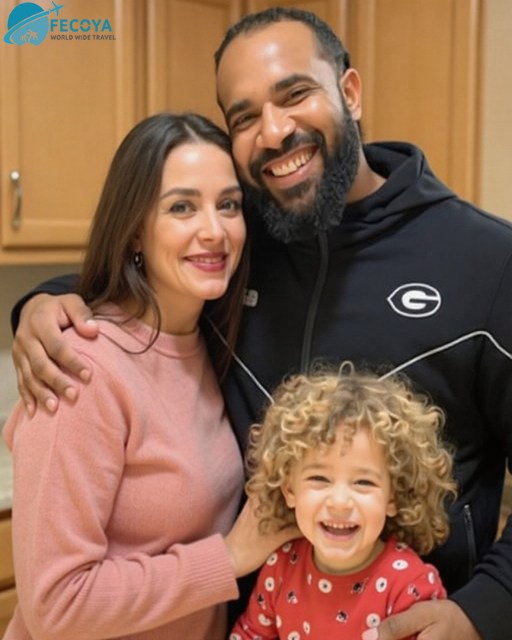
When my husband’s DNA test proved he wasn’t our son’s father, I thought our marriage was over. But when I took my own DNA test to prove my innocence, the truth that came out was darker than anything I could imagine.
It started with a simple Christmas gift — one of those DNA ancestry kits that everyone was talking about. My husband, Alex, thought it would be fun for us and our son, Ethan, to learn more about our family backgrounds.
We had no idea that one small test would tear our world apart.
A few weeks later, Alex opened the results on his laptop. His smile quickly faded. “That’s strange,” he murmured. “It says there’s no genetic match to Ethan.”
I laughed, thinking it was some kind of system error. “That’s impossible, Alex. He’s your son.”
But the screen said otherwise. The words “No biological relationship detected” burned into both our minds.
The color drained from his face. “Are you going to tell me what’s going on?” he asked quietly.
My heart pounded. “There’s nothing to tell! It must be a mistake!”
But Alex didn’t believe me. He moved into the guest room that night. For days, he wouldn’t look at me. Every time I tried to talk, he’d just shake his head.
I couldn’t stand the distance. I ordered my own DNA test to prove that something had gone wrong — that Ethan was definitely ours. But when my results came back, everything I believed about my life shattered.
The report said I wasn’t related to Ethan either.
I sat frozen, staring at the screen, my hands trembling. Not related? How could that be? I had carried him for nine months. I remembered every kick, every craving, every second of labor.
I immediately called the testing company. “There must be a mistake,” I said, voice shaking. “I gave birth to him!”
The representative was calm but firm. “Ma’am, our results are verified multiple times. There’s no error. Ethan is not your biological child.”
I hung up, numb.
When I told Alex, his anger turned to confusion. “Then whose child is he?” he whispered.
That question haunted me. I dug through hospital papers, old files, anything that could explain it. Finally, I contacted the hospital where Ethan was born. After several days of calls and paperwork, they agreed to review the case.
Two weeks later, I got a call that changed everything.
The hospital confirmed there had been a baby mix-up the night Ethan was born. During a power outage in the maternity ward, several newborns were moved for safety — and two infants were switched.
Our real son had been raised by another family… and we had been raising theirs.
I couldn’t breathe. My knees gave out, and I sank to the floor.
Alex and I sat in silence for hours that night, processing the unthinkable. The anger, the confusion, the grief — it all mixed together. But one thing was clear: Ethan was our son in every way that mattered.
When the hospital offered to arrange a meeting with the other family, Alex hesitated. “What if it confuses Ethan?” he asked.
But I needed to see the child I had actually given birth to.
When we finally met the other family, I recognized my biological son instantly — the same eyes, the same dimples. The other mother and I both cried as we hugged. Neither of us knew what to do, what was right.
In the end, we decided not to uproot our children. They had the families who loved and raised them — and love, we realized, meant more than blood ever could.
It’s been three years since that day. Ethan still calls us Mom and Dad. We see my biological son and his family on holidays. The boys have become close — like brothers who were meant to find each other.
Sometimes I still think about what might have been. But when Ethan wraps his arms around me and says, “I love you, Mom,” I know that no test, no mix-up, no dark truth could ever change that.
Because family isn’t just about DNA. It’s about love — and that’s something no lab result can define.