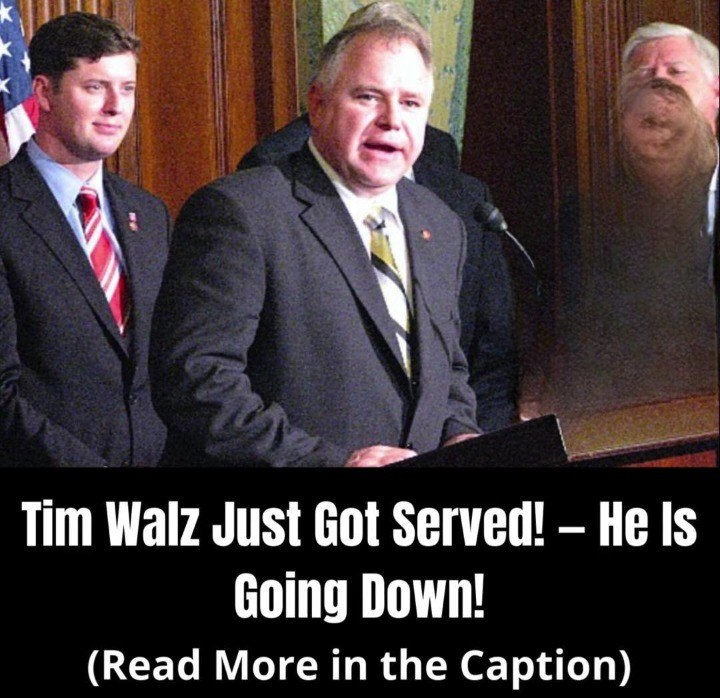
Federal officials issue a new subpoena to Gov. Tim Walz as the $250M Feeding Our Future fraud case expands. Here’s what investigators want and why it matters.
A New Subpoena Targets Tim Walz as Federal Officials Deepen Massive Fraud Investigation in Minnesota
Minnesota is at the center of a major political and legal storm as federal officials expand their investigation into the Feeding Our Future fraud scandal, a case involving an estimated $250 million in misused federal child-nutrition funds.
Governor Tim Walz, once viewed as a steady and pragmatic leader, is now facing increasing scrutiny as Congress issues a formal subpoena demanding documents from his office.
The Feeding Our Future case has already resulted in more than 50 convictions, making it one of the largest fraud schemes in Minnesota’s history. The scandal has raised serious questions about government oversight during the COVID-19 pandemic and the vulnerability of federal emergency-aid programs.
Why the Subpoena Matters
The subpoena was issued by the U.S. House Committee on Education and the Workforce, led by Rep. Virginia Foxx (R-NC). After months of document requests, the Committee says the Governor’s office and the Minnesota Department of Education (MDE) failed to provide key records.
The subpoena demands:
-
Internal communications about Feeding Our Future
-
Correspondence between Minnesota officials and the USDA
-
Staff memos, warnings, and reports about suspicious activity
-
Documents showing how decisions were made inside state agencies
-
Information about state-run investigations into the fraud
Rep. Foxx said Minnesota’s agencies “failed to act decisively despite repeated warning signs.”
How the Fraud Worked
The fraud took advantage of emergency COVID-19 rules that allowed nonprofits to claim federal money for giving meals to children outside of schools.
Federal prosecutors say dozens of groups exploited the system by:
-
Inflating meal counts
-
Claiming fake distribution sites
-
Listing children who did not exist
-
Using funds to buy luxury cars, real estate, and international trips
Money meant to feed children in crisis was instead spent on personal luxury items — shocking Minnesotans and angering families who depended on food programs during lockdowns.
Governor Walz Responds
Governor Walz has strongly denied any wrongdoing.
He says his administration acted under intense pressure during the pandemic and believed the flexible federal rules were necessary to feed children quickly.
Walz acknowledged that:
-
MDE may not have done enough due diligence
-
Oversight was stretched during the pandemic
-
The state acted “in good faith” based on the information available at the time
He insisted that Minnesota cooperated with federal authorities once concerns were raised.
A Guilty Plea That Increased the Pressure
Federal prosecutors recently secured a guilty plea from Guhaad Hashi Said, who admitted to laundering $2.9 million connected to the Feeding Our Future network.
His conviction — the 52nd in the case — revealed new details about how the fraud operation worked. While Said had social connections to Rep. Ilhan Omar, investigators have not accused her of any wrongdoing.
Still, the plea added new political attention and increased pressure on state officials.
Federal Prosecutors Call It a “Major Crisis”
Acting U.S. Attorney Joseph H. Thompson called the fraud scheme one of the largest criminal operations ever uncovered in Minnesota.
He pointed to major oversight failures, including:
-
Poor communication between state and federal officials
-
Lack of follow-up on red flags
-
Overreliance on self-reported meal data
-
Emergency rules that bypassed normal protections
Thompson warned that emergency funding systems must have stronger oversight, not weaker.
Public Reaction in Minnesota
Minnesota residents have expressed:
-
Anger over funds stolen from child-nutrition programs
-
Concern about weak government oversight
-
A sense of betrayal during a time families needed help most
Parents say the scandal made it harder to trust government programs designed to protect vulnerable children.
What Congress Wants to Learn
The House Committee says this investigation is not only about Minnesota — it’s about protecting federal nutrition programs nationwide.
Lawmakers hope to determine:
-
Whether emergency-funding rules need reform
-
How nonprofits should be vetted
-
Whether states need stronger auditing systems
-
How federal and state agencies can communicate better
The scandal may lead to new federal laws governing emergency relief funds.
Could Walz Face More Political Fallout?
The subpoena is rare and serious. Legal experts say that:
-
Congress may demand public testimony
-
Additional subpoenas could follow
-
Non-compliance could lead to escalating action
-
New criminal indictments in Minnesota are still possible
Politically, the outcome could shape Walz’s future. Some analysts believe the investigation could become a long-term liability depending on what the subpoena reveals.
The Human Cost of $250 Million in Fraud
While politicians debate responsibility, Minnesota families were the ones directly affected.
The fraud caused:
-
Reduced food access at community meal sites
-
More pressure on local food shelves
-
Delays in expanding services during lockdowns
-
Long-term damage to public trust
Food-security advocates say thousands of children were put at greater risk during the pandemic because money meant for them was stolen.
Could This Scandal Change Federal Law?
Lawmakers from both parties are discussing potential reforms, including:
-
Real-time digital verification of meal counts
-
Stricter nonprofit eligibility rules
-
Required communication between states and the USDA
-
Limits on emergency-program flexibility
-
Stronger whistleblower protections
The Feeding Our Future case may become a turning point in how emergency nutrition programs are run nationwide.
What Happens Next?
Several possible outcomes are now in play:
1. Full cooperation
Walz’s office provides all requested documents, lowering tensions.
2. Delays or legal fights
This could trigger more subpoenas or public hearings.
3. New charges
Federal prosecutors say more indictments are possible.
4. National reforms
Congress may use this case to reshape future emergency-aid programs.
5. Growing political consequences
How Walz responds may define his future in Minnesota and beyond.
Final Reflection
The Feeding Our Future scandal is one of the largest failures of oversight during the pandemic. It exposed serious weaknesses in how emergency programs are managed — at both the state and federal level.
This case is no longer just about Minnesota.
It is a national example of how quickly fraud can spread when billions in aid are released without strong protections.
As investigators continue their work and Congress pushes for answers, one thing is clear:
This scandal will shape child-nutrition policy, federal oversight, and political accountability for years to