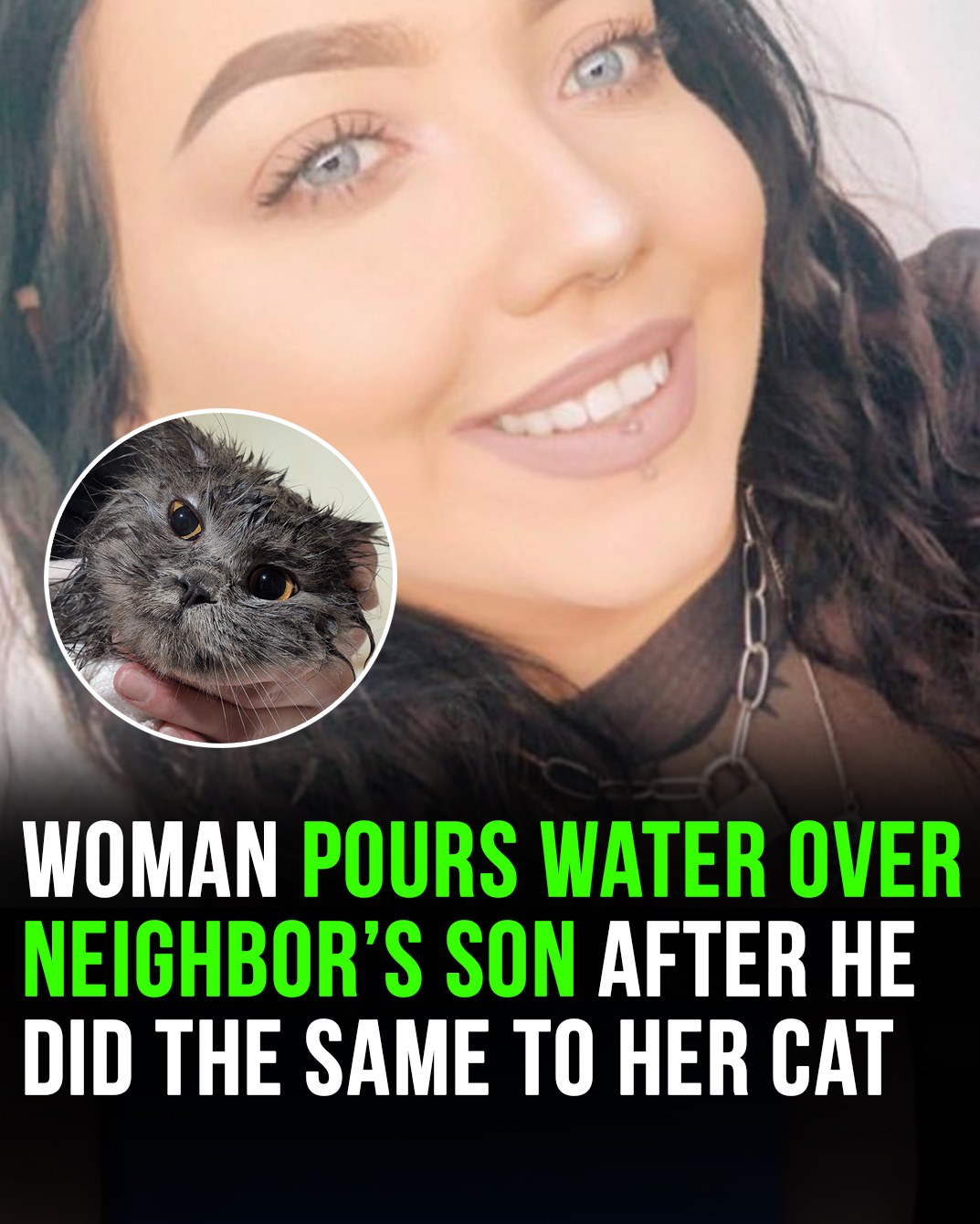
A woman went viral after defending her cat from a neighbor’s child. Her response sparked debate about animal cruelty, parenting, and teaching empathy.
Cruelty toward animals often triggers strong emotional reactions, especially when the victim is a defenseless pet. Society widely agrees that how people treat animals reflects empathy, responsibility, and moral values. While laws and awareness around animal welfare have improved over the years, everyday incidents still remind communities why vigilance matters.
One such moment recently went viral online after a woman named Shannon Cooper shared an encounter involving her cat and her neighbor’s child.
What Happened
According to Shannon, she noticed the child pouring water onto her cat while it sat calmly on a fence. The animal reacted in distress, while the child laughed. Seeing this, Shannon says she acted on instinct and poured water back on the child.
Later, she posted about the moment on the social media platform X with a short message: “Don’t touch my cat.”
The post quickly gained attention, spreading across social media and sparking thousands of reactions.
Why the Story Went Viral
Many animal lovers supported Shannon, saying her response was a harmless but clear lesson that hurting animals — even as a joke — is unacceptable. Supporters pointed out that water caused no injury, yet sent a strong message about boundaries and respect.
Parents also joined the discussion, agreeing that children must learn early to treat animals kindly. Some noted that real-life consequences, when safe and proportionate, can help reinforce empathy.
Others viewed the incident as an example of protecting vulnerable creatures when adults witness wrongdoing.
Criticism and Debate
Not everyone agreed with Shannon’s actions. Critics argued that she should have spoken to the child’s parents instead of reacting directly. They stressed that adults should model calm behavior and avoid retaliation, especially when children are involved.
The debate highlighted a broader issue: how to balance immediate protection with long-term teaching. Some suggested alternative approaches such as explaining the animal’s feelings, guiding the child toward empathy, or involving guardians to address behavior constructively.
Follow-Up and Resolution
In a later update, Shannon clarified that the situation did not create lasting conflict. She said the child and his father eventually laughed about the incident, and her cat was unharmed.
This follow-up helped ease tensions and showed that moments of conflict can still end with understanding and communication.
A Larger Conversation About Empathy
The viral story opened a wider discussion about animal welfare, parenting, and community responsibility. Experts often note that early lessons in kindness toward animals can shape lifelong attitudes.
Social media plays a powerful role in these conversations, turning everyday events into teaching moments for millions of people.
Final Thoughts
Shannon Cooper’s experience serves as a reminder that protecting animals, teaching empathy, and setting boundaries often intersect in real life. While opinions may differ on how best to respond, the story underscores a shared belief: animals deserve care, respect, and protection.
In a digital age where stories spread quickly, even small actions can spark meaningful discussions about compassion, responsibility, and the values communities choose to uphold.