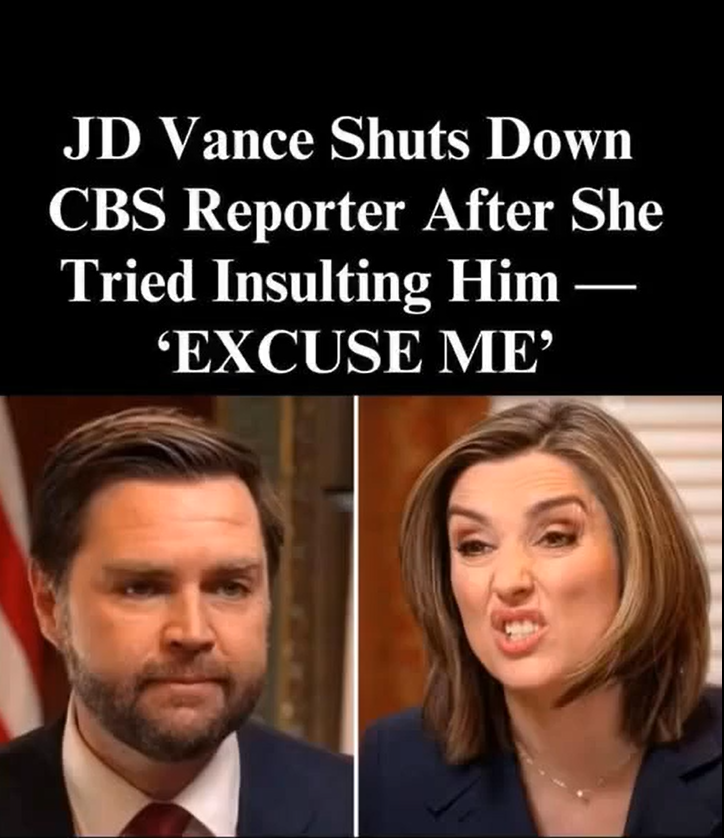
Vice President JD Vance fiercely defended Tulsi Gabbard on CBS, pushing back against host Margaret Brennan’s criticism and calling her the best choice to lead U.S. intelligence.
Vice President J.D. Vance is standing firmly behind Tulsi Gabbard as the nominee for Director of National Intelligence (DNI), and he didn’t hold back when challenged by CBS anchor Margaret Brennan.
During a tense interview on Face the Nation, Brennan cited critical headlines from conservative outlets such as The Wall Street Journal and National Review. Both publications had called Gabbard an “atrocious nominee,” pointing to her defense of Edward Snowden and skepticism over U.S. intelligence claims about Syrian President Bashar al-Assad.
“Does any of this give you pause putting her in charge of the U.S. intelligence community — yes or no?” Brennan pressed.
Vance’s answer was direct:
“No, Margaret. These are publications that attacked Donald J. Trump obsessively. They don’t determine who the president is — the American people do. And Donald J. Trump decides who his cabinet is, not these publications that, frankly, have lost relevance.”
Brennan responded that the Senate would have the final say, but Vance expressed confidence Gabbard would be confirmed.
He praised her two decades of military service, her high-level security clearance, and her strong record of integrity, saying she could restore public trust in the intelligence community.
“Our intelligence services have been part of the weaponization of our political and justice systems,” Vance argued. “We need to bring them back to their core mission — keeping Americans safe.”
When Brennan countered that Gabbard doesn’t trust the intelligence agencies, Vance fired back:
“She recognizes the bureaucrats have gotten out of control. We need someone to rein them in and focus on real security threats. Tulsi is the right person to do it.”
The exchange highlighted growing tensions over Trump’s cabinet selections — and underscored Vance’s loyalty to both Gabbard and the administration’s vision for reforming U.S. intelligence operations.