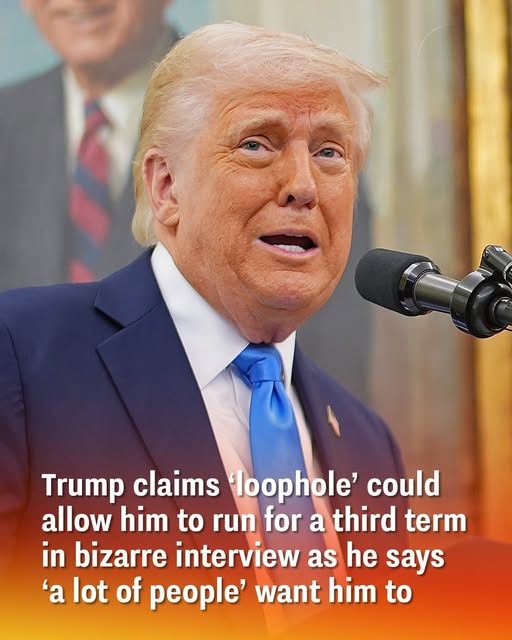
Donald Trump’s recent comments reignited debate over presidential term limits. Could a U.S. president ever serve more than two terms? History, law, and expert analysis explain why the answer is almost certainly “no.”
The Two-Term Tradition in American Politics
For decades, the two-term presidential limit has been a cornerstone of American democracy. Enshrined in the 22nd Amendment, it ensures that no leader may serve more than eight years in the White House.
Yet the question still resurfaces: Could the rule ever change?
Recently, former President Donald Trump reignited the debate by suggesting “loopholes” might exist, fueling speculation about the history, legality, and future of presidential term limits.
The Origins of the Two-Term Limit
The original U.S. Constitution placed no restriction on how many terms a president could serve.
-
George Washington set the precedent by stepping down after two terms in 1797.
-
Most presidents followed this tradition, though Franklin D. Roosevelt broke it by winning four elections, serving from 1933 until his death in 1945.
-
In response, Congress passed the 22nd Amendment in 1951, formally limiting presidents to two elected terms.
Trump’s Remarks on a Possible Third Term
In a recent interview, Trump speculated about scenarios that could allow a president to serve beyond two terms. He referenced:
-
A potential constitutional amendment.
-
Hypothetical legislative proposals.
-
Questions around succession loopholes, such as returning to office through the vice presidency.
While his comments drew headlines, legal experts stress that under current law, none of these pathways are realistically possible.
The Legal Reality: Why a Third Term Is Nearly Impossible
Several barriers make a third presidential term highly unlikely:
-
The 22nd Amendment – Explicitly states that no person can be elected president more than twice.
-
Amending the Constitution – Would require a two-thirds vote in both the House and Senate, plus ratification by three-fourths of state legislatures. Given today’s polarization, this is nearly impossible.
-
Succession Theories – Legal scholars reject the idea that a former two-term president could return as vice president and then assume the presidency. The eligibility restriction is clear.
Though some members of Congress occasionally introduce bills to repeal or alter term limits, none have advanced significantly.
Historical Echoes of the Debate
Trump is not the first to question presidential term limits:
-
Ronald Reagan once called the restriction “ridiculous.”
-
Bill Clinton suggested presidents should be allowed to serve non-consecutive terms after sitting out.
-
Barack Obama famously remarked he believed he could have won a third time if allowed.
Globally, many leaders—from Vladimir Putin to Xi Jinping—have extended or abolished term limits, fueling comparisons and concern in the U.S.
Why the Debate Strikes a Nerve
The question resonates because it touches on broader democratic values:
-
Polarization – Partisan divides intensify reactions.
-
Popularity – Leaders with strong bases inspire loyalty that outlasts term limits.
-
Checks and Balances – Term limits prevent power from concentrating in one individual.
Public Reaction to Trump’s Comments
Responses to Trump’s remarks were split:
-
Supporters argue voters should be free to re-elect the leader they trust.
-
Critics warn that removing term limits could erode democratic safeguards.
-
On social media, the debate ranges from memes and jokes to serious constitutional discussions.
Looking Ahead
Despite recurring debate, the legal framework is firm: no president may serve more than two terms under current U.S. law.
While proposals to amend the 22nd Amendment will likely reappear, experts agree that meaningful change remains highly unlikely.
Conclusion
The idea of a third presidential term continues to spark curiosity, controversy, and political theater. But history and law are clear: America’s two-term limit is one of the strongest guardrails in the U.S. system, and it is unlikely to change anytime soon.
For now, the two-term rule remains not just a legal requirement, but a symbol of America’s commitment to limited executive power and democratic balance.