When relatives turned cruel toward my daughter, I chose to protect her—even if it meant asking family to leave. A story of parenting, courage, and peace.
When my brother-in-law Sammy went through a painful divorce, my wife Laura asked me to let him and his two teenage daughters, Olivia and Sloane, stay with us for a while. I agreed, believing it was the right thing to do. After all, family helps family during hard times.
But I had no idea how much it would change the atmosphere in our home—and how deeply it would affect my daughter, Zoey.
When Family Becomes the Source of Pain
Zoey, 14 at the time, has always been a quiet, artistic, and sensitive soul. Her creativity has been a constant light in our home. But once Olivia and Sloane moved in, she became their target.
At first, it was subtle: her sketchbooks went missing, her art supplies were ruined, and her room was invaded without permission. Then came the cruel words—mocking her artwork, her clothes, and even calling her “weird.”
The breaking point came when Zoey’s brand-new laptop—the one she had saved up for—was mysteriously destroyed. No one took responsibility.
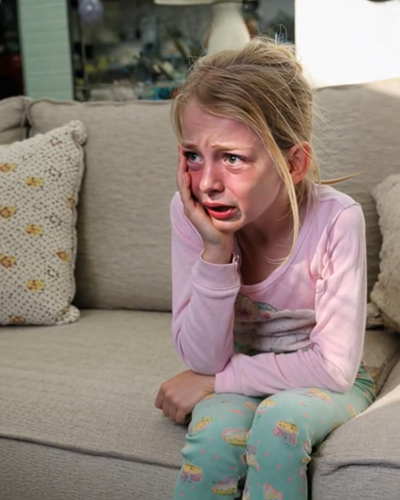
Zoey came to us in tears, but while I believed her, Laura thought she was just struggling to adjust. Sammy dismissed it all as “normal teenage stuff.” But I knew my daughter. This wasn’t drama—it was bullying.
The Silent Proof I Needed
When conversations and warnings failed, I made a hard decision. I installed small security cameras in the house—not in private rooms, only in common areas like the hallway, living room, and study. I didn’t do it to spy. I did it to protect my daughter.
Within days, the truth was caught on video.
I watched Olivia and Sloane enter Zoey’s room while she was away, mocking her paintings, spilling juice on her sketchbook, and laughing as they destroyed her supplies. Then came the most painful moment: the video showed them dropping her laptop and laughing as the screen cracked.
My heart sank—but I finally had undeniable proof.
Family Movie Night: The Truth Revealed
That Sunday, I gathered everyone for a “family movie night.” When they all sat down, I pressed play on the footage.
For 45 minutes, I said nothing. The silence in the room grew heavier with every clip. Laura’s face shifted from confusion to horror. Sammy looked stunned. Olivia and Sloane stared at the floor, their arrogance gone.
Zoey sat beside me, holding my hand. When the video showed her laptop breaking, she whispered softly, “That’s what I was trying to tell you.”
Laura broke down, hugging Zoey tightly. “I’m so sorry. I should have listened. I should have protected you.”
Then I turned to Sammy. Calm but firm, I told him: “You and your daughters need to pack your things and leave. Tonight.”
To my relief, Laura stood by me. She told her brother, “You’re my brother, but this is my child. And I will always choose her.”
That night, they left. And for the first time in months, our home felt peaceful again.
Choosing Peace Over Conflict
Later, I tucked away the cameras. I didn’t need them anymore. The truth had been seen. Zoey’s pain had been validated.
She cried that night—not from sadness, but from relief. She finally felt safe, finally felt believed.
And I realized something important: protecting your child sometimes means making uncomfortable choices. It means standing firm when others deny the truth. It means being their advocate, their protector, and their voice.
And if I had to do it all over again, I would—every single time.