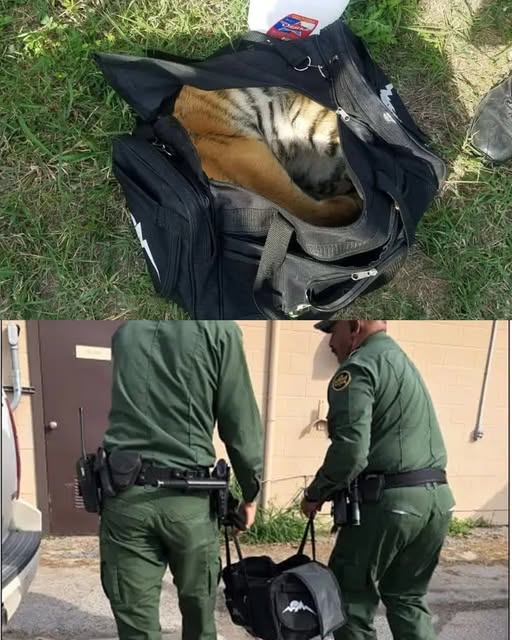
Border Patrol agents in Texas were shocked to find a live tiger cub stuffed inside a duffel bag near the Rio Grande. The rare rescue highlights the growing crisis of illegal wildlife trafficking and the fight to protect endangered species.
Border Patrol’s Shocking Find: A Tiger in a Bag
The evening sun dipped low over Brownsville, Texas, coloring the sky in warm shades of gold and pink as Border Patrol agents watched the Rio Grande. This is a place where danger and desperation often blend — smugglers, migrants, and traffickers move under the fading light, testing the limits of law and compassion.
But on this particular evening, what agents discovered was unlike anything they had ever seen.
As three men made their way along the muddy riverbank, agents noticed one of them carrying a large, oddly shaped black duffel bag. When officers approached, the men panicked — dropping the bag and fleeing into the thick brush, leaving behind something unbelievable.
When the agents unzipped the bag, they froze.
Inside was a tiny tiger cub, no more than four months old — trembling, dehydrated, and struggling to breathe. Its fur was matted and dirty, and its eyes blinked weakly in the dim light. It was clear the animal had been smuggled and abandoned.
A Rescue That Shocked the Border
The discovery left everyone speechless. This wasn’t a stash of drugs or weapons — it was a living, endangered creature caught in the middle of human greed. The agents immediately contacted wildlife experts and rushed the cub to the Gladys Porter Zoo, where veterinarians began a desperate effort to save its life.
They named him “Zuko.”
Zuko was given fluids, warmth, and constant care. For hours, his condition was touch and go. Slowly, the little tiger began to recover — lifting his head, opening his eyes, and showing his first signs of strength.
The Hidden World of Wildlife Trafficking
While Zuko’s rescue ended in hope, it revealed a much darker reality.
Experts estimate that fewer than 3,200 tigers remain in the wild today — yet more than 5,000 tigers live in captivity in the United States, many in private hands or unlicensed facilities.
Illegal wildlife trafficking is a multi-billion-dollar global business, often connected to organized crime, human trafficking, and drug smuggling. Smugglers use hidden routes and creative disguises to move animals like Zuko across borders — stuffed into crates, boxes, and even bags.
The cub’s rescue has become a powerful symbol of the fight against this growing crisis.
A Call for Stronger Action
The Gladys Porter Zoo and several conservation groups have since urged lawmakers to strengthen laws on exotic animal ownership and increase enforcement at borders. They also stress the importance of public awareness — because every illegal purchase fuels this brutal trade.
Wildlife experts are now pushing for:
-
Stronger penalties for animal traffickers
-
Tighter border inspections to identify wildlife smuggling
-
Bans on private tiger ownership and unlicensed breeding
-
Public education on the dangers of buying exotic pets
Hope for Zuko and Others Like Him
For the Border Patrol agents who found Zuko, and the zoo staff who saved him, his survival is a reminder of humanity’s power to protect — not exploit. As Zuko grows stronger, he represents both a success story and a warning: thousands of animals like him may not be as lucky.
His story has spread across social media, sparking outrage — and hope.
It shows that even in the darkest corners of the illegal animal trade, compassion and quick action can make all the difference.
Conclusion: A Symbol of Survival and Change
Zuko’s story is more than just a strange border encounter — it’s a reflection of a global fight to protect endangered species and hold wildlife traffickers accountable.
Every life saved matters. Every law strengthened counts.
And every story like this reminds us that the fight for our planet’s most majestic creatures is far from over.
👉 Read more inspiring and trending stories at kalib9.com