
Federal agents arrest Juan Espinoza Martinez, a suspected Latin Kings gang member, for allegedly plotting a murder-for-hire scheme targeting U.S. Border Patrol Chief Gregory Bovino in Chicago.
Chicago, IL – Federal agents have arrested Juan Espinoza Martinez, 37, a high-ranking member of the Latin Kings gang, for allegedly planning a murder-for-hire plot targeting Gregory Bovino, a senior official with the U.S. Border Patrol based in Chicago.
According to the U.S. Attorney’s Office for the Northern District of Illinois, Martinez faces charges under Title 18, U.S. Code, Section 1958(a), which covers federal murder-for-hire crimes. Investigators say Martinez used Snapchat to post bounties on Chief Bovino — offering $2,000 for his location and $10,000 “to take him down,” along with a photo believed to be of Bovino.
Authorities say Martinez was arrested on October 6 at his home in Burr Ridge, Illinois, following an investigation that began after a confidential informant provided screenshots of the threatening posts.
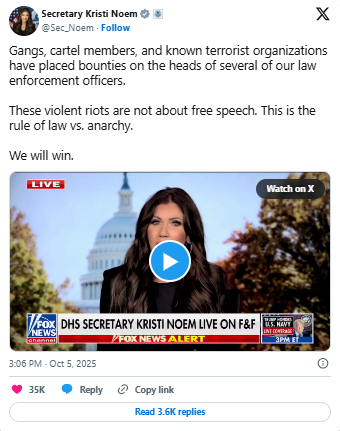
Deputy Attorney General Todd Blanche called the alleged plot “an attack on every American who depends on law enforcement for safety.” U.S. Attorney Andrew S. Boutros added that the case reflects a “profound contempt for human life and public safety.”
The complaint also includes details from a Homeland Security Investigations (HSI) agent’s affidavit describing Martinez’s leadership role in the Latin Kings. It claims he ordered gang members to gather weapons and prepare for violence in several Chicago neighborhoods following a recent police operation.
Martinez has made his initial court appearance and remains in federal custody. Prosecutors stress that the charges are only allegations, and he is presumed innocent until proven guilty.
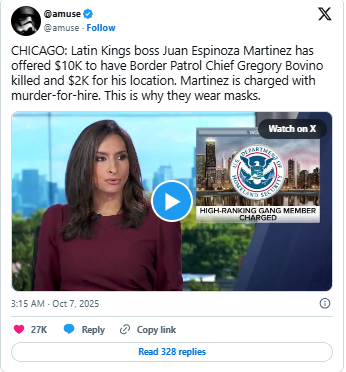
Chief Gregory Bovino, who has led Operation Midway Blitz, a joint federal effort to fight organized crime and immigration-related offenses in Chicago, has not commented publicly on the case.
This high-profile arrest highlights growing concerns over gang-related threats to law enforcement and the digital platforms used to organize criminal activity. Legal experts believe the case could set an important precedent for prosecuting online murder-for-hire plots and threats against federal officials.