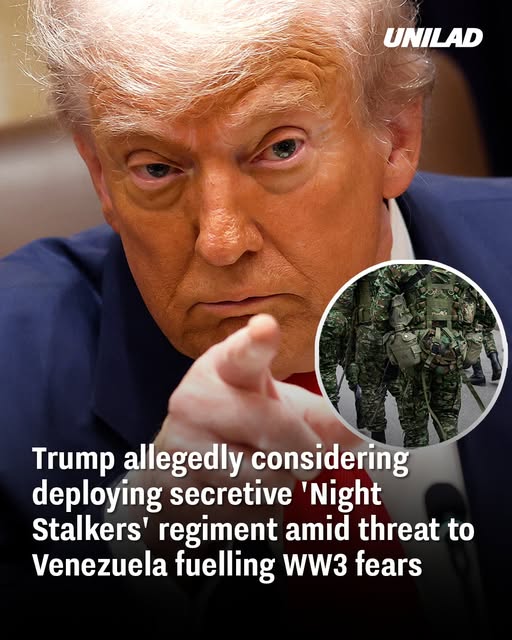
Tensions flare as the U.S. increases military pressure on Venezuela. Reports say elite 160th SOAR “Night Stalkers” helicopters have been seen training near the region while the White House authorizes covert CIA action. Here’s a plain-language summary of what’s public and why analysts are concerned.
Quick summary
-
U.S. forces have stepped up activity near Venezuela, including B-52 bomber flights and reported strikes on suspected drug vessels. ABC News+1
-
The White House has said it authorized covert CIA operations in Venezuela. Officials are also reportedly considering further military options. Reuters+1
-
Several news outlets report special-operations aviation (the 160th SOAR, aka “Night Stalkers”) have been spotted or training near the region — a development that raises fears of possible direct-action missions. BNO News+1
-
Critics warn the moves could escalate tensions and risk wider conflict; supporters say the actions target narco-trafficking and protect U.S. security. Financial Times+1
What has the U.S. done so far?
In recent weeks the U.S. has increased its military presence in the southern Caribbean and the waters near Venezuela. That buildup has included long-range bomber flights — U.S. officials called some sorties a “show of force.” ABC News
At the same time, the Pentagon and White House have publicized strikes on vessels the U.S. calls drug-carrying boats or submarines. The administration says these strikes are part of a campaign to stop deadly fentanyl and other drug flows. The strikes have caused casualties and sparked debate about the legal and diplomatic limits of such actions. AP News+1
CIA covert action: what was confirmed?
President Trump and U.S. officials have confirmed the CIA received authorization to carry out covert operations in Venezuela. That authorization may include a range of activities meant to disrupt criminal networks and pressure the Maduro government. U.S. leaders say the moves are aimed at narco-trafficking and associated threats. Reuters+1
Who are the “Night Stalkers” and why does their presence matter?
The 160th Special Operations Aviation Regiment (160th SOAR) — nicknamed the “Night Stalkers” — is an elite U.S. Army helicopter unit that supports special-operations forces (SEALs, Green Berets, Delta Force). Their helicopters and crews are trained for high-risk missions, including insertion and extraction of special forces at night. Wikipedia+1
Multiple outlets report that aircraft believed to belong to the Night Stalkers have been seen in training flights in the region or nearby countries. If true, those flights show a higher level of operational readiness than routine presence and suggest planners are preparing options that could include direct action — though no strike orders have been publicly confirmed. BNO News+1
Why some observers fear escalation (and why others argue the U.S. is justified)
Concerns:
-
Movement of special-operations aviation and authorization for covert action raises the risk that a limited operation could spiral into wider fighting. Some experts warn that miscalculation could draw in other states or trigger broader unrest in the region. Financial Times+1
Administration’s case:
-
The White House frames these steps as part of an aggressive campaign against organized narco-trafficking groups that, it says, fund and protect corrupt or violent actors. Officials argue kinetic actions have disrupted smuggling and are necessary to protect U.S. citizens from fentanyl and other drugs. AP News+1
What Venezuela is doing in response
Venezuelan leaders have denounced U.S. actions as hostile. Reports say President Nicolás Maduro has moved troops, staged military drills, and rallied domestic support in response to the U.S. pressure. Caracas warns that any attack would prompt strong resistance. Wikipedia
Bottom line: what’s confirmed — and what isn’t
Confirmed:
-
B-52s and other U.S. aircraft have flown near Venezuela. ABC News
-
The U.S. has carried out strikes on vessels it labeled drug targets; survivors are being handled under U.S. custody and repatriation arrangements have been announced. AP News+1
-
The White House confirmed authorization for covert CIA operations in Venezuela. Reuters
Unconfirmed or speculative:
-
A formal, publicly announced deployment of Night Stalkers into Venezuelan territory has not been confirmed by the Pentagon. Open-source reports and local sightings suggest Night Stalkers-type aircraft have been active in the general region, but that is not the same as a combat deployment inside Venezuela. Reported training and sightings are being covered by multiple outlets but lack official Pentagon confirmation. BNO News+1
What to watch next
-
Official statements from the Pentagon or White House about any new missions or deployments. Reuters
-
Congressional oversight and legal debates over the use of lethal force in international waters and authorization of covert action. (Several outlets have reported rising scrutiny in Congress.) AP News+1
-
Moves by regional actors and Venezuela’s own military posture; these will shape whether tensions cool or continue to rise. Financial Times
Final note
This is a fast-moving situation. The most authoritative public facts right now are the bomber flights, reported strikes on maritime targets, and the White House’s confirmation about CIA authorization. Reports about special-operations aviation activity are important and worth watching, but they remain in reporting and open-source sightings rather than official combat orders. Responsible coverage should distinguish confirmed actions from claims and sightings to avoid unnecessary alarm.
Sources (key reporting)
-
Reuters: U.S. confirmed authorization for CIA actions in Venezuela. Reuters
-
AP / Al Jazeera / Politico: U.S. strikes on suspected drug vessels and repatriation of survivors. AP News+2Al Jazeera+2
-
ABC News / Air & Space Forces / BNO: B-52 flights and regional military activity. ABC News+2Air & Space Forces Magazine+2
-
Financial Times / Vox / The Guardian: analysis and context on the broader buildup and risks.