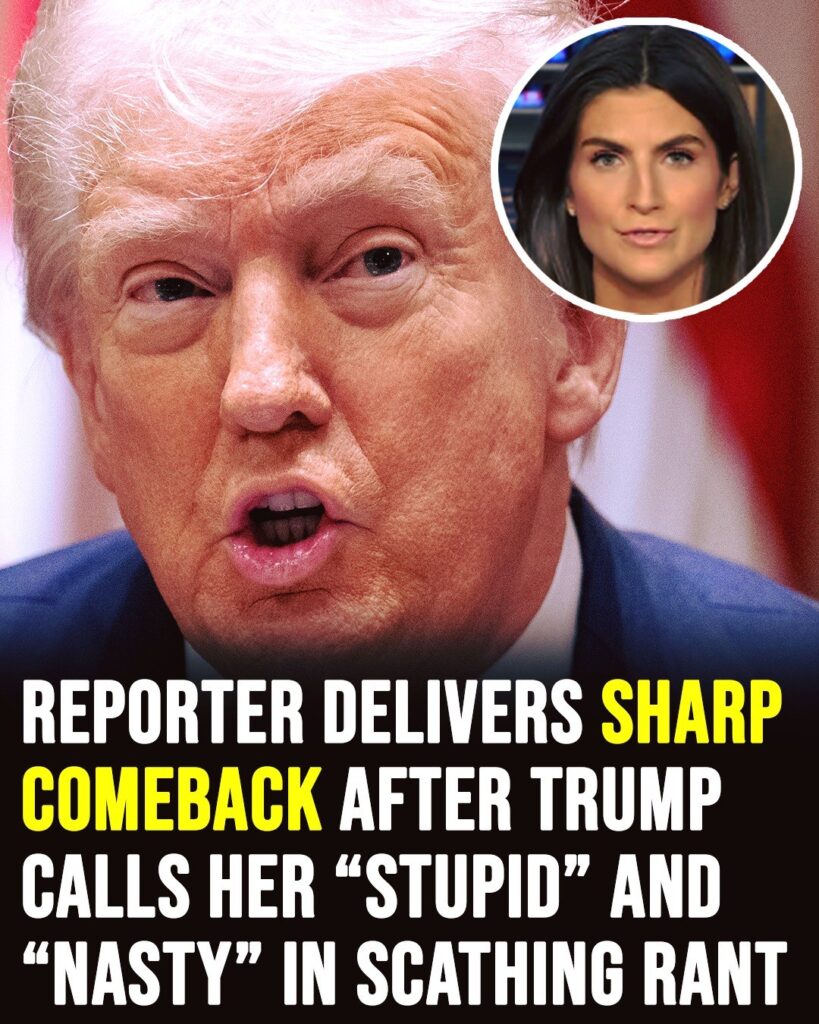
CNN journalist Kaitlan Collins pushes back after Donald Trump calls her “stupid,” reigniting national debate on misogyny, press freedom, and presidential conduct. Here’s what happened and why it matters.
CNN Reporter Fires Back After Trump Calls Her “Stupid” — The Incident That Sparked a National Debate
Former U.S. President Donald Trump has always had a rocky relationship with the media, but in recent months his attacks on journalists—especially female reporters—have grown louder, sharper, and more personal.
The latest conflict erupted when Trump insulted CNN chief White House correspondent Kaitlan Collins, calling her “stupid,” which pushed the long-running tension between Trump and the press back into the spotlight.
Below is a clear breakdown of what happened and why this story is getting so much attention.
Trump’s Long History of Clashing with the Media
Trump’s battles with journalists are nothing new. Throughout his political career, he has often dismissed critical reporting as “fake news.”
Supporters see this as holding the media accountable.
Critics see it as a dangerous attack on free press.
But recently, the tone has shifted—and female reporters have become his main targets.
What once would have been considered a major scandal—an American president publicly insulting journalists—has become normalized in today’s political climate.
A Pattern of Verbal Attacks on Women Journalists
In November, Trump shocked many when he told a Bloomberg reporter to “quiet, piggy” after she asked a question he didn’t like.
The comment sparked outrage from journalists and women’s rights organizations.
Soon after, he insulted another CNN reporter, calling her:
-
“nasty”
-
“stupid”
These attacks spread quickly across social media and reignited concerns about sexism in political communication.
Critics argue that Trump uses gendered insults to intimidate women.
The White House denies this, saying his comments “have nothing to do with gender.”
The Kaitlan Collins Confrontation
The most talked-about moment came during a press conference when Kaitlan Collins asked Trump about White House renovations.
Trump snapped:
“Are you stupid? Are you a stupid person?”
He later continued the insults on his social media platform, misspelling her name and calling her:
-
“Stupid”
-
“Nasty”
-
“Fake News”
CNN quickly defended Collins, calling her an “exceptional journalist trusted worldwide.”
Collins also clarified that her question wasn’t about renovations—it was about a deadly bombing near Venezuela that killed more than 80 people, a major international news event.
Insults Spread Beyond Journalists
Trump didn’t stop at the press.
During Thanksgiving week, he launched attacks on political rivals and public officials online, including:
-
An ableist insult toward Minnesota Governor Tim Walz
-
An Islamophobic remark directed at Rep. Ilhan Omar
He also attacked The New York Times for reporting that he appeared fatigued, calling their journalists “creeps.”
The Times stood by its reporting, emphasizing that name-calling would not stop them from covering his administration.
The Gender Question: Is It Misogyny or Media Criticism?
The White House insists Trump’s insults aren’t about gender.
But media watchdogs disagree.
Research shows women journalists face:
-
More personal insults
-
More online harassment
-
More threats
Trump’s frequent targeting of women, critics say, reinforces a harmful pattern.
Why This Matters: The Bigger Picture for Press Freedom
Many organizations—including the Committee to Protect Journalists—warn that public attacks from political leaders can:
-
Undermine trust in journalism
-
Intimidate reporters
-
Limit investigative reporting
-
Encourage harassment
Yet journalists like Kaitlan Collins continue to stand firm, asking tough questions and correcting misinformation despite hostile pushback.
Their resilience reflects the importance of a free press in any democracy.
Conclusion
Donald Trump’s attack on Kaitlan Collins is part of a growing pattern of confrontational rhetoric toward female journalists.
While the White House claims gender plays no role, many observers see a troubling trend that raises concerns about:
-
Press freedom
-
Sexism in politics
-
The normalization of insults in public discourse
As Trump continues to use social media to attack journalists and political opponents, debates about power, accountability, and the role of the press are only becoming more intense.
Journalists, meanwhile, remain committed to their mission—proving that despite hostility, the work of a free press continues.