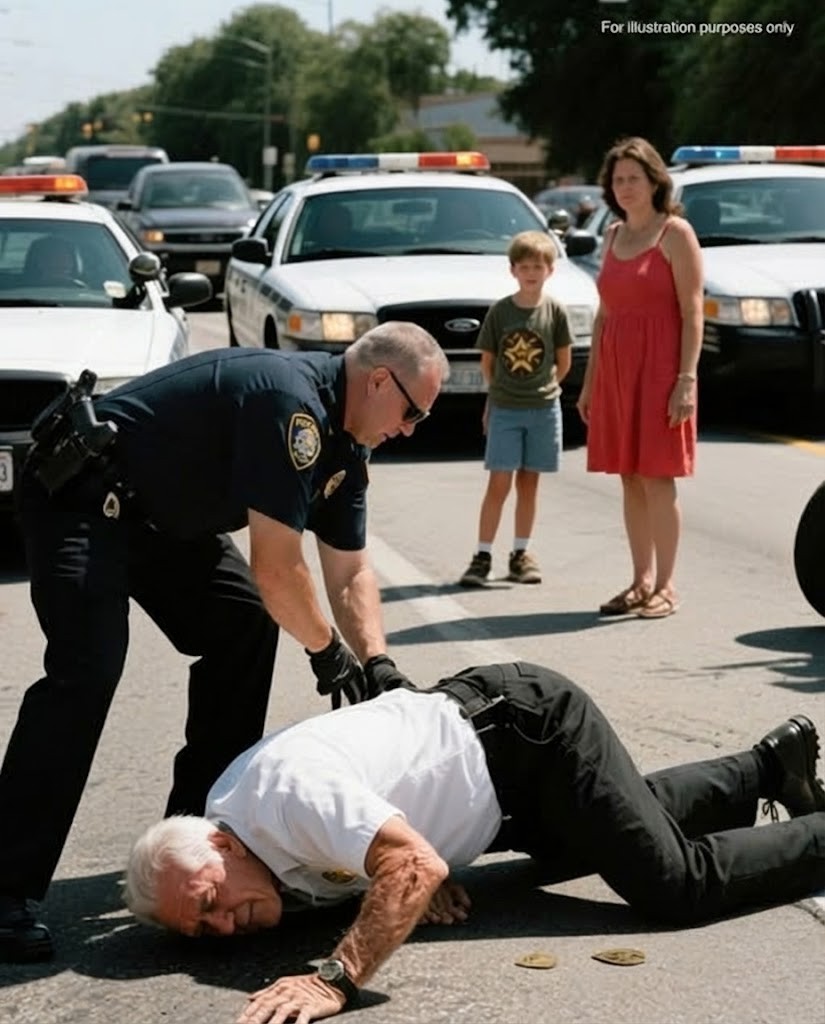
Police forced my 72-year-old veteran husband face-down on scorching asphalt. The heat hurt—but what the officer whispered off-camera nearly destroyed him. This is what happened next.
The Day Everything Changed
The day they forced my husband to the ground will haunt me forever.
It was 97 degrees outside, the kind of heat that makes asphalt shimmer. My husband, Harold, is 72 years old. He has arthritis in both knees and metal in his back from years of hard living and harder service.
He was on his motorcycle, heading to a routine VA appointment.
That’s it.
No crime. No danger.
Yet within minutes, four police cars surrounded him.
Treated Like a Criminal
The officers ordered Harold off his bike and forced him face-down onto the burning pavement. His knees scraped against asphalt hot enough to blister skin. Passing cars slowed. People stared.
To them, he looked like a dangerous biker.
To me, he was a Bronze Star veteran, a gentle man who survived two tours in Vietnam and spent decades helping other veterans heal through charity rides.
One young officer stood close, his boot near my husband’s head, and said:
“Stay down, old man.”
Harold’s only “crime”? A supposedly loud exhaust pipe—one that had passed inspection just two weeks earlier.
By the time they finally allowed him to stand, his face was burned red, his hands shook, and the dignity he had protected his entire life was cracked.
The Words That Broke Him
The heat wasn’t what hurt him most.
Neither was the humiliation.
It was what happened next.
When the dash camera wasn’t facing them, the officer leaned in and whispered:
“Guys like you don’t belong on the roads anymore. Next time, we’ll find something that sticks.”
When Harold told me later, his voice was small. Quiet.
This was the same man who taught our children to ride bikes. The man who used motorcycle rides to manage PTSD. The man who never backed down from life.
After that day, he changed.
Watching Him Fade
He stopped going on his weekly veteran rides.
He sat alone in the garage for hours, staring at the motorcycle that once saved him from darkness.
When they forced him to the ground, they didn’t just pin his body.
They tried to pin his spirit.
I Refused to Stay Silent
So I stood up.
I started asking questions. Talking to other riders. Other veterans.
The pattern was clear.
Older bikers. Veterans. Men who had spoken out against a new city ordinance designed to push them off the roads.
By the time the next city council meeting came, I had evidence. Witnesses. Statements. Support from VA advocates and legal advisors.
The Room Went Silent
I stood before the council and showed the video of my husband on the pavement.
I named the men who had been targeted.
Then I looked the mayor in the eye and asked:
“Why do we honor veterans on Memorial Day but treat them like criminals the rest of the year?”
The room erupted.
Veterans stood to speak. Families cried. The VA director demanded change.
That night, the silence broke.
Justice, Slowly Earned
The ordinance was withdrawn.
The police department announced new training.
And slowly, Harold began to return.
The first morning I heard his motorcycle start again, my chest tightened. He rode out of the driveway steady and proud.
Days later, his riding brothers arrived with a patch that read:
“TOO TOUGH TO STOP.”
Harold laughed—for the first time in weeks.
The Ending They Didn’t Expect
He even agreed to help train the officer who humiliated him.
Not out of weakness.
But because real strength means leading, not retreating.
Harold rides again—not because he won a battle, but because he refused to let fear decide how his story ends.
And if anyone ever tries to force him down again, they’ll learn the truth:
Men like Harold earned their place on these roads.
And women like me will protect that place with everything we have.
If this story moved you, share it to honor veterans, dignity, and the power of standing up when it matters most.