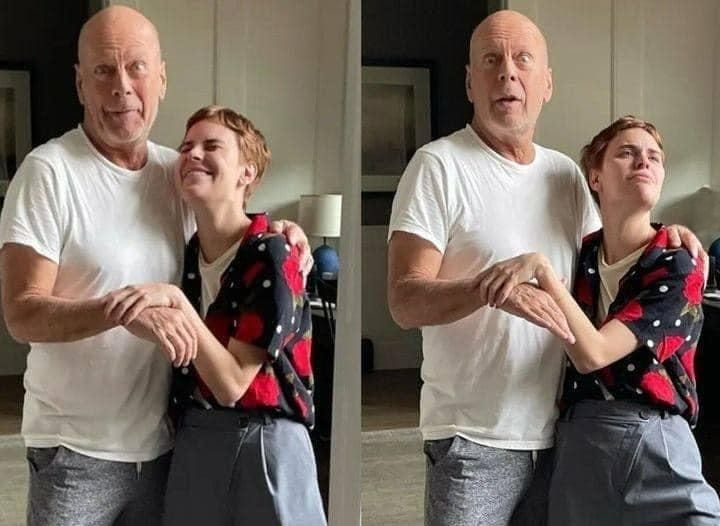
Bruce Willis is now living in a separate one-story home as part of his dementia care. His wife Emma Heming Willis shares an emotional update on his health and family life.
Bruce Willis’ Wife Shares Major Update as Actor Moves to a Second Home
Bruce Willis has entered a new chapter in his life as he continues to live with frontotemporal dementia (FTD). In a recent and deeply personal update, his wife, Emma Heming Willis, shared new details about the difficult decisions their family has made to protect Bruce’s health, dignity, and quality of life.
The update was shared during an ABC special titled Emma & Bruce Willis: The Unexpected Journey, which aired on August 26. In the interview, Emma revealed that Bruce is now living in a separate, one-story home located close to their main family residence.
A Decision Made Out of Love, Not Distance
Emma made it clear that the move does not reflect emotional separation. Instead, it is a carefully planned step to ensure Bruce receives the best possible care in an environment suited to his condition.
She described the choice as one of the hardest decisions she has faced since Bruce was diagnosed with frontotemporal dementia in 2023. The diagnosis came less than a year after the family first shared that Bruce was dealing with aphasia, a neurological disorder that affects communication.
Since stepping away from acting, Bruce has largely remained out of the public eye. Emma explained that much of their journey has been private, as they learn how to adapt to a disease that is still widely misunderstood.
Putting Their Children First
During an interview with Diane Sawyer, Emma said the decision to create a second home was guided by one main priority: their daughters.
Bruce and Emma share two children, Mabel Ray, 13, and Evelyn Penn, 11. According to Emma, Bruce would have wanted their home to be designed around their needs rather than his.
“I knew, first and foremost, Bruce would want that for our daughters,” Emma said. “He would want them to be in a home that was more tailored to their needs, not his needs.”
Why a Separate Home Became Necessary
As Bruce’s condition progressed, the family learned how much environment can affect someone living with dementia. Emma explained that noise, changes in routine, and overstimulation can sometimes cause agitation and stress.
The family decided some time ago to create a calmer, quieter space where Bruce could feel safe and supported. The one-story layout was chosen to reduce the risk of falls and make it easier for caregivers to assist him.
The change was not without emotional challenges. For a period of time, Emma said their daughters were unable to host playdates or sleepovers.
“I didn’t know if parents would feel comfortable leaving their kid at our home,” she shared. “I isolated our whole family, and that was by design. That was a hard time.”
Balancing the roles of caregiver and mother, she admitted, was emotionally exhausting.
A Second Home Filled With Warmth
Despite living separately, Emma emphasized that Bruce’s new residence is not a place of loneliness. Instead, it has become a second home for the entire family.
“We’re there a lot,” she said. “It’s our second home, so the girls have their things there.”
Friends continue to visit Bruce regularly, bringing laughter and companionship. Emma described the atmosphere as loving, warm, and full of life.
“It is a house that is filled with love and warmth and care and laughter,” she said. “It’s been beautiful to see how many of Bruce’s friends continue to show up for him.”
Living With Frontotemporal Dementia
Frontotemporal dementia affects the frontal and temporal lobes of the brain and can impact behavior, personality, communication, and decision-making. Unlike Alzheimer’s disease, FTD often appears at a younger age and progresses differently in each person.
In Bruce’s case, communication has been one of the biggest challenges. Earlier reports suggested his appetite has decreased and that he no longer expresses hunger clearly. Ensuring he eats regularly and maintains a healthy diet has become part of the family’s daily routine.
Sources close to the family have also noted that Bruce has difficulty recognizing people and expressing himself verbally.
Addressing Misinformation
Emma has spoken openly about the emotional impact of seeing misleading headlines about her husband. She previously said she was deeply affected by claims suggesting that “there is no more joy” in Bruce’s life.
She has stressed that while Bruce’s abilities have changed, he still experiences moments of happiness, comfort, and connection — even if those moments look different than before.
By sharing their story, Emma hopes to raise awareness about frontotemporal dementia and remind people that those living with the condition still deserve compassion and respect.
Early Warning Signs She Now Recognizes
During the ABC special, Emma reflected on the early changes she noticed before Bruce’s diagnosis.
Once outgoing and expressive, Bruce became quieter and more withdrawn. Family gatherings felt different, and his warmth seemed to fade.
“He felt a little removed, a little cold,” Emma said. “That was alarming and scary.”
Looking back, she now recognizes these subtle shifts as early symptoms of the disease.
Adapting to a New Way of Communicating
Despite everything, Emma shared that Bruce remains physically mobile and is otherwise in good overall health.
“It’s just his brain that is failing him,” she said.
As his language skills decline, the family has learned new ways to communicate with him — methods built on patience, understanding, and love.
A Journey Shared to Help Others
Through interviews and public appearances, Emma Heming Willis has become a strong advocate for dementia awareness. By speaking honestly about grief, fear, and resilience, she hopes to help other families feel less alone.
Bruce Willis may no longer appear on movie screens, but his legacy — and the love surrounding him — remains powerful.
The decision to move him into a separate, specialized home, Emma says, is not an act of separation, but an act of love.