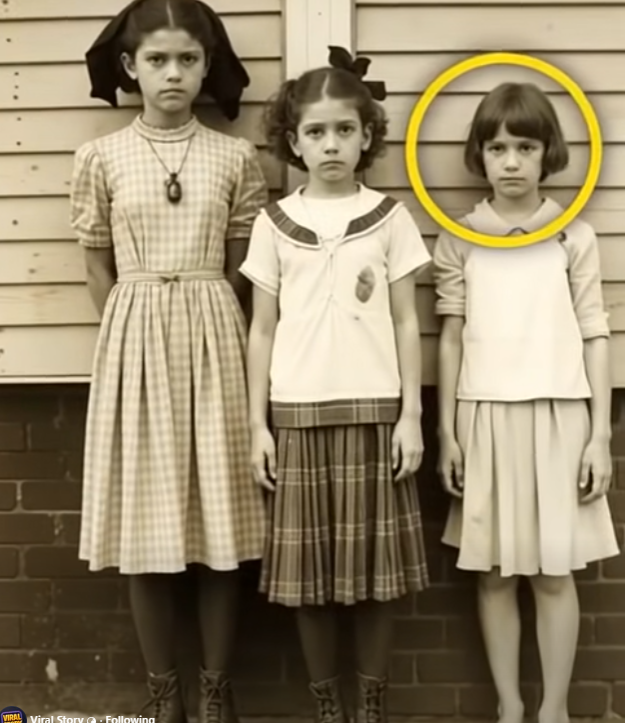
A 1912 photo of child worker Pearl Turner revealed hidden genetic resilience. Researchers say this rare discovery sheds new light on survival during child labor.
Century-Old Photo Reveals Shocking Discovery About Child Labor Survivor
In 1912, three young girls stood outside the Porte Mill in Gastonia, North Carolina, to be photographed. None of them could have imagined their image would be studied more than a century later. Among them was nine-year-old Pearl Turner, who had already been working at the mill for three years.
Life in the textile mills was brutal. Children faced long hours, dangerous machinery, and clouds of cotton dust that often led to deadly lung diseases. Many child workers never lived long enough to see adulthood.
A Modern Breakthrough
Fast forward to 2025: researchers reviewing Thomas Himmel’s historic photo collection made a surprising discovery. Using advanced imaging techniques, they studied Pearl’s face and noticed subtle features suggesting she had a rare genetic resistance to industrial lung illnesses.
While most mill children tragically died young, Pearl survived. Records show she lived until 1964 — far longer than many of her peers.
Expert Confirmation
Professor Sonia Abernathy and her team confirmed that this single photograph offered more than just a glimpse into the past. It revealed medical evidence of extraordinary resilience. Pearl’s physiology, unknowingly captured in 1912, showed early indicators of resistance to diseases that claimed thousands of child laborers’ lives.
More Than Just a Photo
What was once an ordinary mill photo has now become a powerful symbol of survival. Pearl Turner, once just one among countless exploited children, is remembered today as a representation of hidden strength against impossible odds.
Her story reminds us that history holds not only tragedy, but also resilience, endurance, and unexpected triumphs.
👉 Takeaway: A single photograph can hold more than memories — sometimes, it carries hidden truths that rewrite history. Pearl Turner’s survival proves that even in the darkest times, human resilience can shine through.